
A schnauzer haircut can be a surprisingly big reveal. The fluffy outline becomes a tidier silhouette, the beard gets its shape back, and those expressive eyes have their moment. But a good groom is about more than an attractive after photo: the haircut should fit the dog’s coat, comfort, and everyday routine.
Here is a closer look at Rory’s transformation at Crowned Schnauzers, using our own before-and-after photographs. The photos document his appearance; they do not establish the exact blade length, every step of the appointment, or the condition of his skin. The guidance below helps you talk through those decisions with your groomer rather than guessing from a picture.
Rory’s before and after
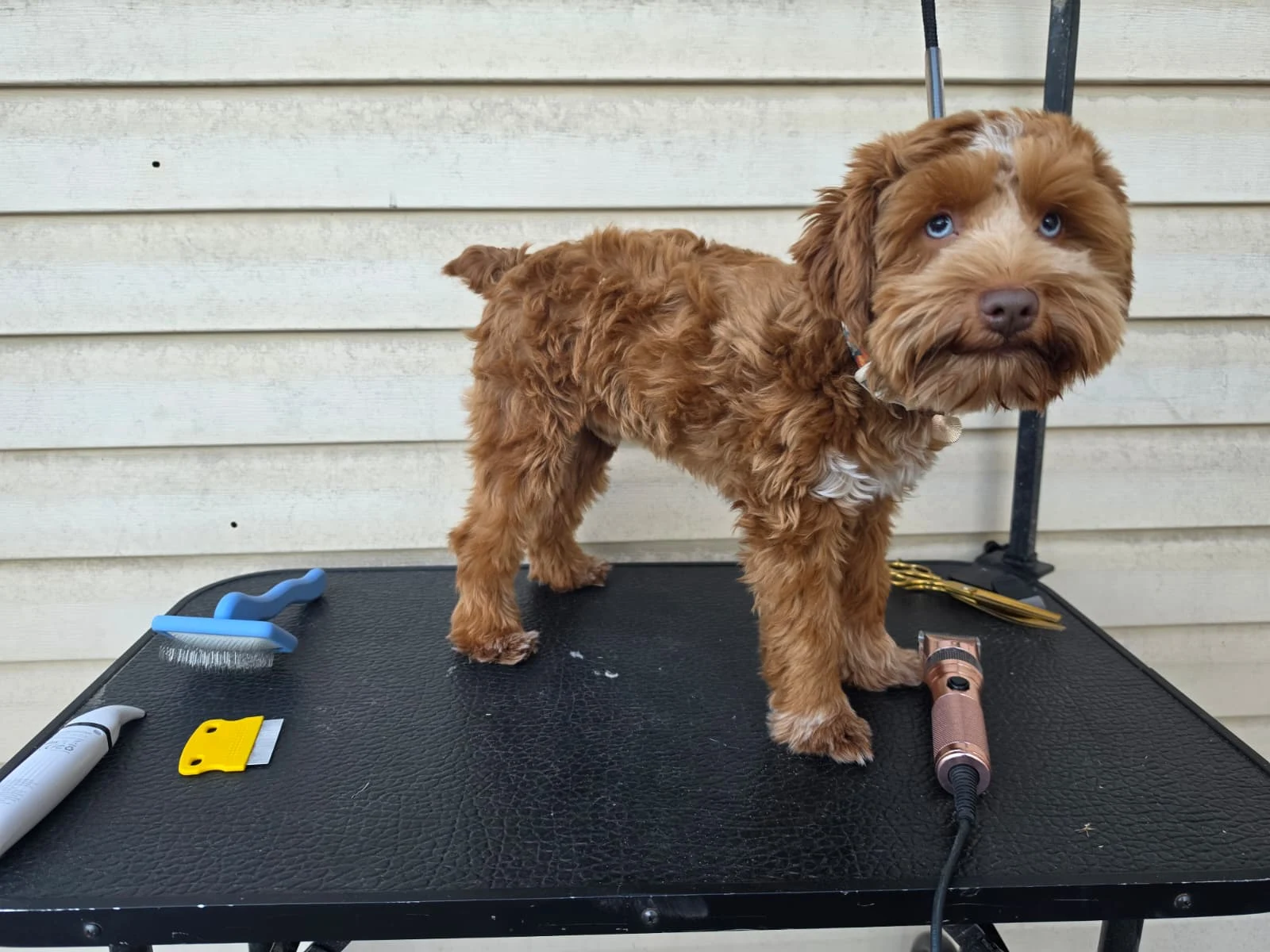
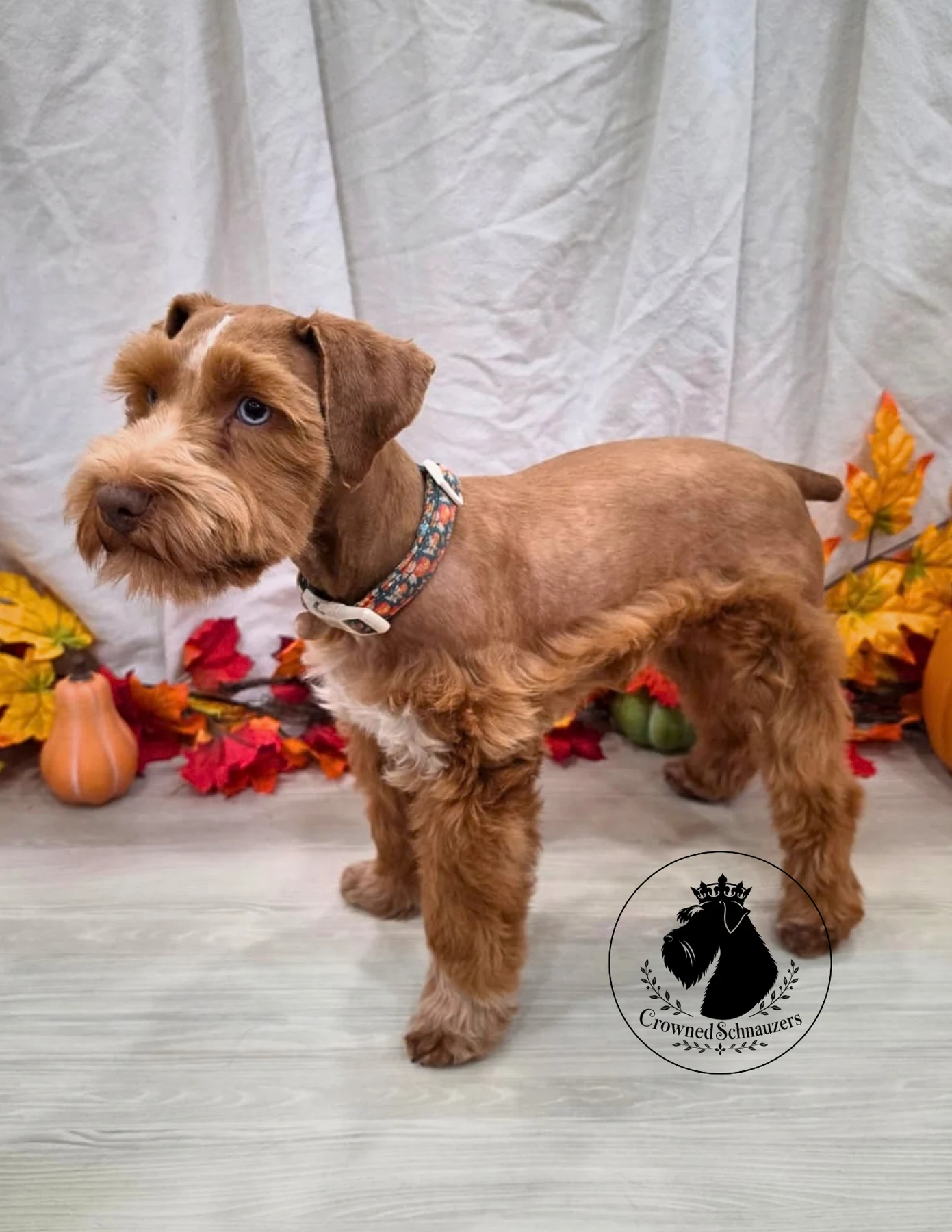
Look first at the body. In the before photo, longer hair creates a fluffy outline over Rory’s back and sides. In the after photo, the shorter jacket makes that outline easier to see. His legs remain noticeably fuller than the body, and his beard remains part of the finished look. Those longer areas are often called furnishings.
Now look at the face. The after portraits make the shaped beard and eyebrows more apparent without taking away his schnauzer expression. This is a useful reference for a family who wants a tidy body while keeping some softness around the face and legs.
Our photo observation: Rory’s before and after show how different the same dog can look at different coat lengths. They are not a promise that another dog’s trim will look identical. Coat texture, density, proportions, and the amount of hair available to shape all affect the result.
A closer look before the finished trim
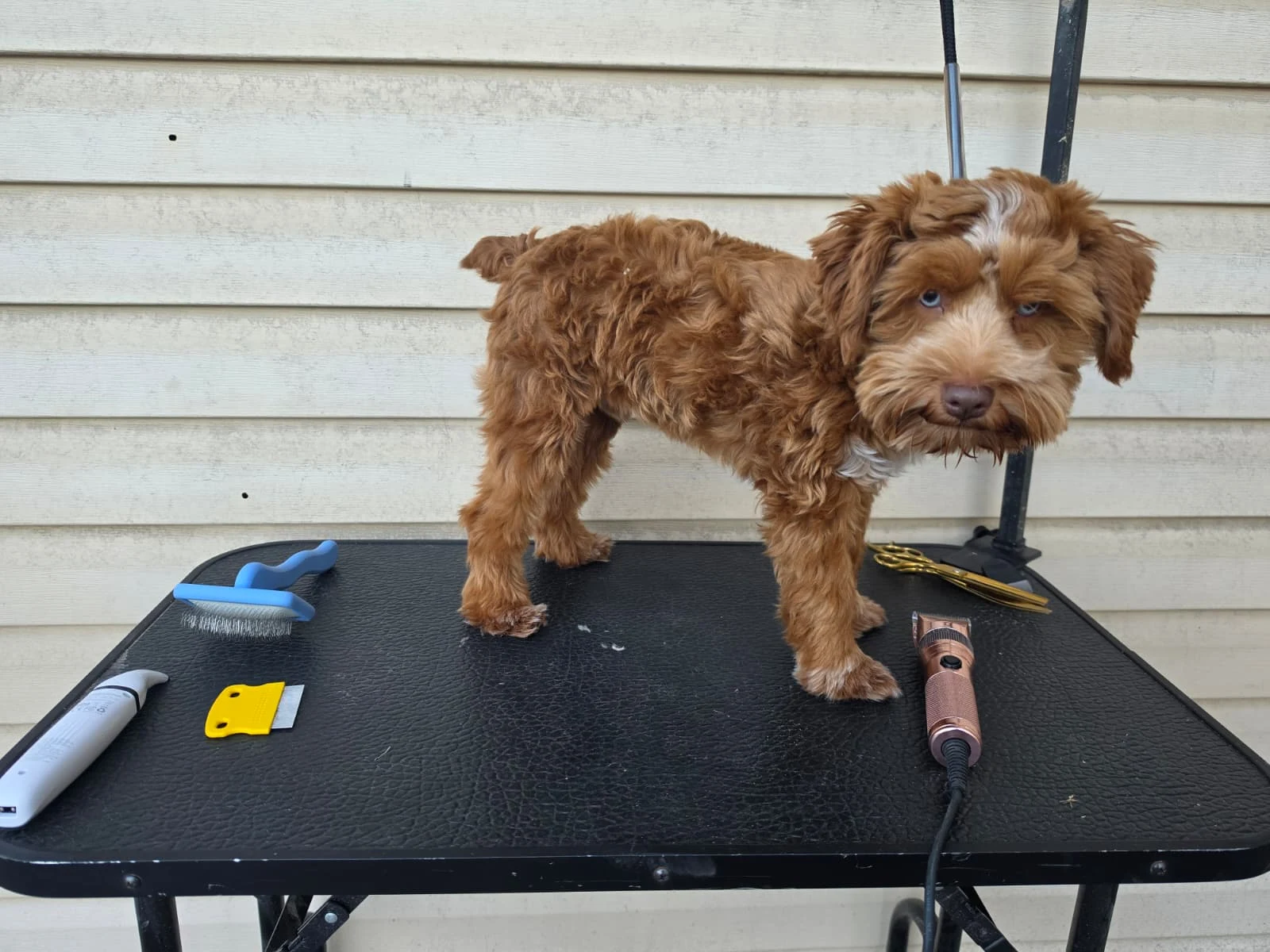

Bring more than a face photo to an appointment. A side view helps explain how short you want the body, how much leg hair you hope to keep, and whether you prefer a clear transition between the jacket and furnishings. A front view helps communicate the beard and eyebrow shape. Together, they give a groomer more to work with than “make him look like a schnauzer.”
Choose a haircut you can maintain
The best pet haircut is one you like and can realistically care for between appointments. Before choosing a style, think about your dog’s walks, outdoor play, mealtime mess, tolerance for brushing, and your available time.
A schnauzer-inspired pet trim
This look pairs a shorter body with a recognizable beard, eyebrows, and longer leg furnishings. Rory’s after photos are a visual example of that shorter-body, fuller-leg contrast. Ask your groomer which details suit your dog rather than requesting an exact copy of another dog’s photograph.
A softer, rounded pet look
Some families prefer a softer expression, a less pronounced eyebrow, or a more rounded beard. Terms such as “teddy bear cut” and “puppy cut” can mean different things in different salons. Take a reference photo and agree on the actual body, leg, and face lengths before the appointment.
A shorter, practical trim
If long furnishings are becoming difficult to comb, discuss reducing their length. A shorter beard or legs can be a sensible maintenance choice; it is not a failure to keep the longest possible coat. Tell the groomer what you can comfortably manage and ask what will happen if the coat has tangles that cannot be brushed out safely.
Pet clipping and hand-stripping are different
A clipped pet haircut and a hand-stripped show coat are not the same grooming service. Hand-stripping removes selected coat hairs by hand and is used to maintain the characteristic wiry coat for conformation. Many pet families choose professional clipping instead. Discuss your goals with a groomer familiar with schnauzers, especially if you plan to show your dog or want to maintain a wiry coat. AKC’s Miniature Schnauzer overview explains that distinction.
At Crowned, we describe some of our dogs as having a mega coat. That description is not a haircut instruction or a separate grooming standard. Show your groomer the actual coat and agree on a manageable style for that individual dog.
What the tools photo shows

Our tools photo gives a behind-the-scenes look at the equipment alongside these grooming images. Curved shears help shape an outline, thinning shears can soften transitions, and clippers shorten the coat. A slicker brush and comb are part of coat preparation and maintenance. The small yellow comb has closely spaced teeth; it is not a substitute for a full-length coat comb that reaches through the furnishings.
Seeing a tool in a photo does not tell you which blade, guard, or technique was used on each part of the dog. It also does not mean every owner needs to buy the entire set. For home upkeep, ask your groomer to recommend a brush and metal comb suited to your dog’s coat and demonstrate how to use them gently.
Cutting deserves hands-on instruction. Leave work around eyes, ear edges, pads, skin folds, and sanitary areas to a trained professional until you have been taught safe handling and technique. Do not cut tight mats out with scissors. AKC’s home-grooming safety guidance advises against untrained clipping and scissor removal of mats.
Make the appointment easier before it starts
You do not need to recreate a salon at home. You can help your puppy become comfortable with the small experiences that grooming involves: brief gentle touches on the paws, a comb moving through a small patch of coat, and someone lifting the beard to look at the face. Reward calm participation and stop before the session becomes a struggle.
Tell the groomer about handling sensitivities, previous grooming experiences, and any skin concerns your veterinarian is managing. A puppy may need a gradual introduction rather than a perfect full haircut at the first visit. Ask the salon how it handles breaks and fearful dogs.
For the haircut itself, agree on four things:
- Body: how short you want it and how much contrast you want with the legs.
- Face: the beard length, eyebrow shape, and how much softness you want to retain.
- Furnishings: which longer areas you can keep combed between visits.
- Follow-up: when to return and what to do at home before the next appointment.
That conversation is more useful than an unqualified “short” or “fluffy.” Ask the groomer to explain anything you do not understand before work begins.
Keep the fresh groom looking good
A finished haircut is the starting point for the next few weeks of care, not a replacement for care. Establish a routine with your groomer that suits the length you kept.
Daily: a small comfort check
Check the beard after meals and wipe away debris with a damp cloth. Gently comb longer furnishings as needed, particularly where your dog’s coat tends to tangle. Keep these checks short and comfortable rather than pulling through resistance.
Weekly: check below the surface
Work through the coat gently in small sections and follow the brush with a suitable comb. A smooth-looking surface can hide a tangle underneath. Check behind the ears and under the legs, and ask for help if you find tight mats. AKC discusses those friction areas in its everyday grooming guide.
Monthly: review your plan
Review whether the haircut is still easy to maintain. Ask your groomer to set the next appointment interval based on coat growth and condition, rather than treating one schedule as right for every schnauzer. Bathing needs also vary; use dog-specific products, rinse well, and dry appropriately. AKC’s everyday grooming guide explains why bathing and brushing routines should suit the individual dog.
For a fuller checklist, see our daily, weekly, and monthly grooming guide. If grooming reveals pain, wounds, persistent redness, or unusual skin changes, stop and speak with your veterinarian; a haircut is not a treatment for a medical problem.
Rory’s finished look, from every angle
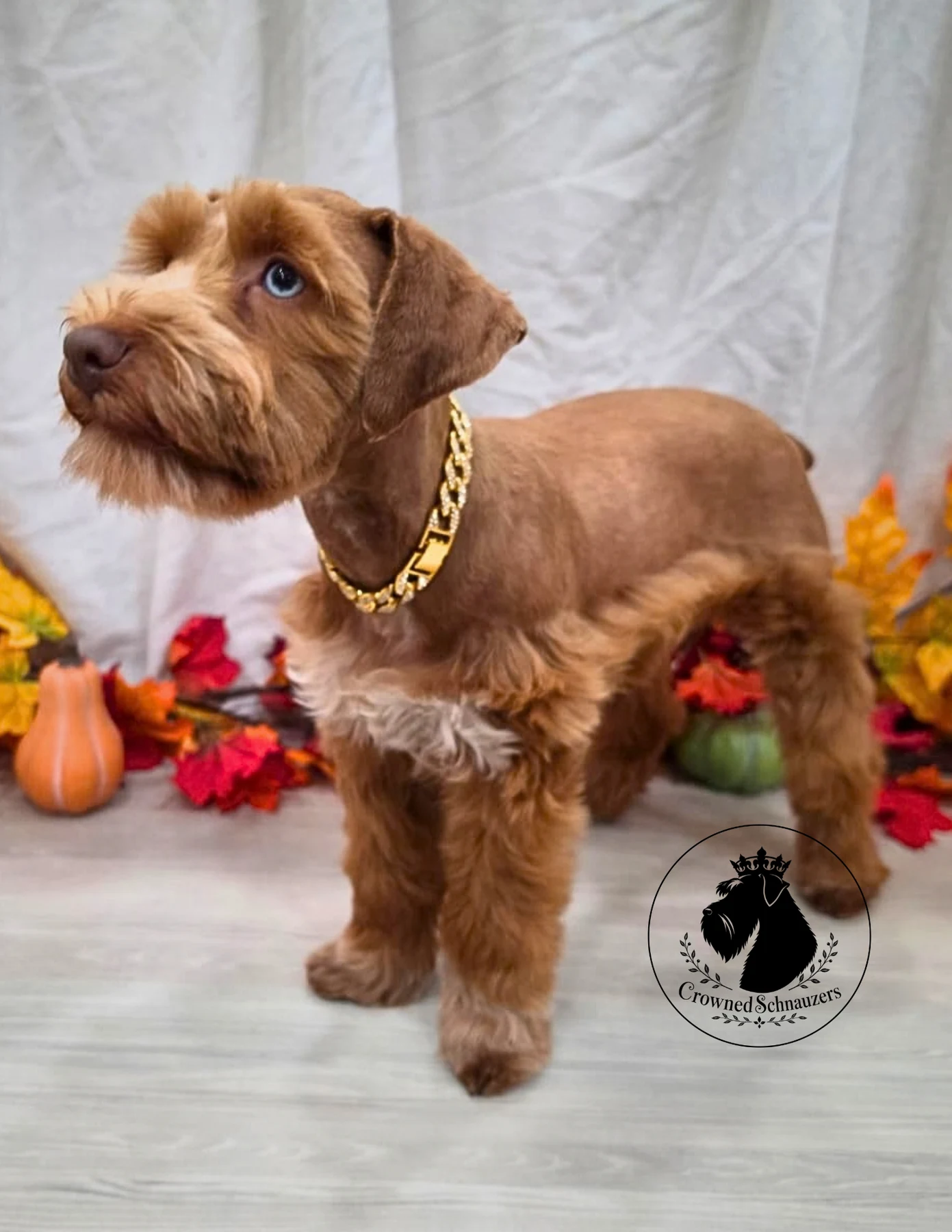

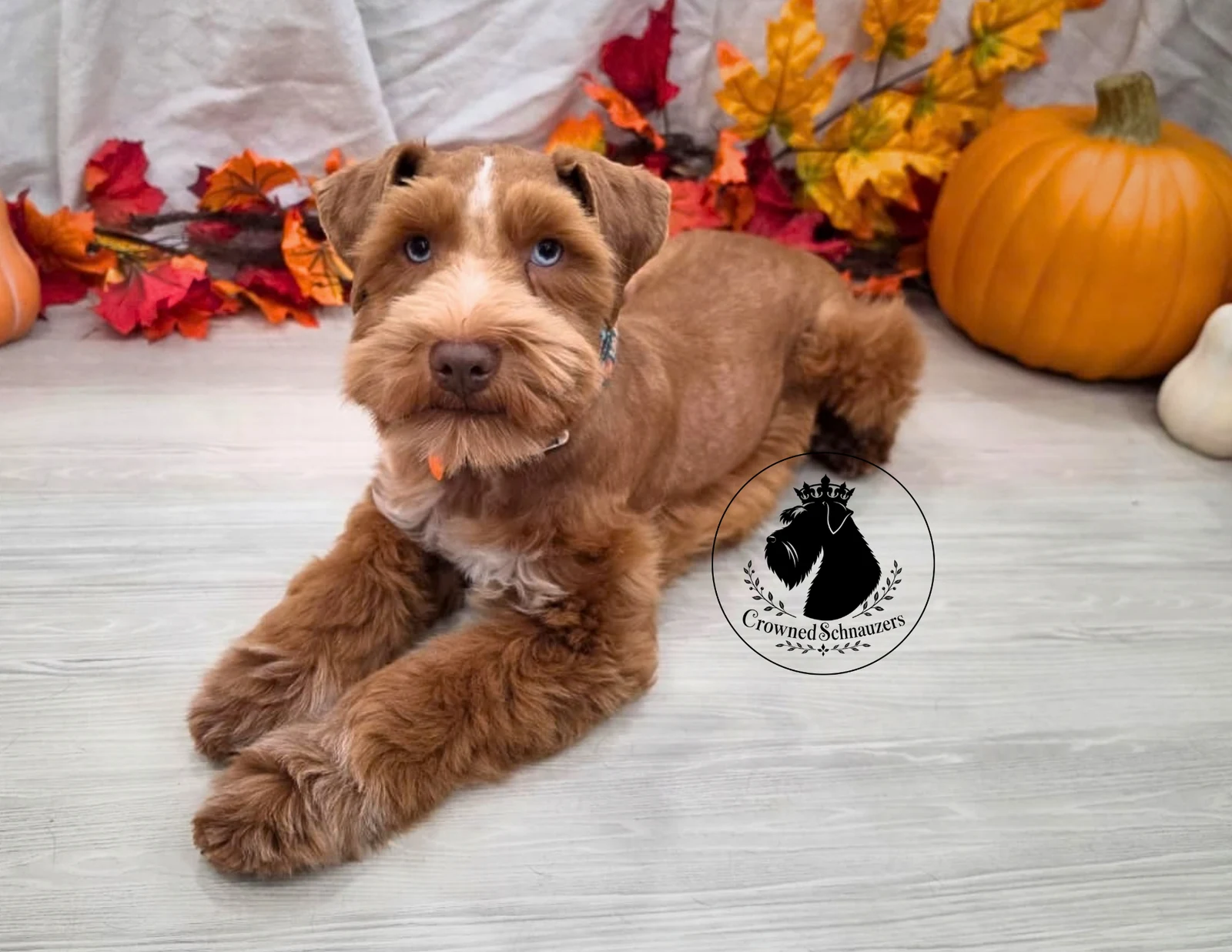
The side, seated, and resting views each tell a different part of the story. The side view shows the jacket and leg contrast. The seated photo highlights the face. The resting portrait shows the fullness that remains in the front legs. Save the view that communicates the detail you like, then talk with your groomer about adapting it to your own dog.
Questions families ask about schnauzer haircuts
Will my puppy look just like Rory after grooming?
Not necessarily. These are reference photographs of one dog, not a universal haircut result. Your groomer can help translate the features you like to your puppy’s coat, proportions, and tolerance for handling.
Does “puppy cut” mean one specific length?
No. Use that phrase as the beginning of a conversation, not the complete instruction. Explain how long you want the body, beard, eyebrows, and legs, and confirm the plan with reference photos.
Can I keep fluffy legs with a short body?
Rory’s photos show that combination. Whether it is a good choice for your dog depends on the available coat and your ability to keep the longer areas gently combed. Ask about a shorter version if upkeep is becoming difficult.
Can I do the whole haircut myself?
Routine coat maintenance and a full clipper-and-scissor haircut are different skills. Get hands-on instruction before attempting cutting work. If your dog is fearful, moving unpredictably, or matted close to the skin, a professional appointment is the safer starting point.
What should I bring to the groomer?
A front and side reference photo, a description of the upkeep you can manage, and relevant information about your dog’s handling or skin concerns. Ask for a maintenance demonstration before you leave.
A royal look, built around real life
Rory’s fresh trim is a reminder that thoughtful grooming can keep the schnauzer character you love while making the coat more practical to maintain. Choose a look together with your groomer, keep home care gentle, and let comfort guide the details.
Meet Rory, explore our schnauzer care resources, or join the waitlist if you are planning for a puppy from Crowned Schnauzers.
About the photographs and guidance
All eight images in this article were supplied by Crowned Schnauzers in its Before and After folder. Photo observations are labeled separately from general grooming guidance. We have not assigned an unconfirmed blade length, appointment duration, puppy age, or medical outcome to these images. This article is educational and does not replace hands-on grooming instruction or veterinary care.